












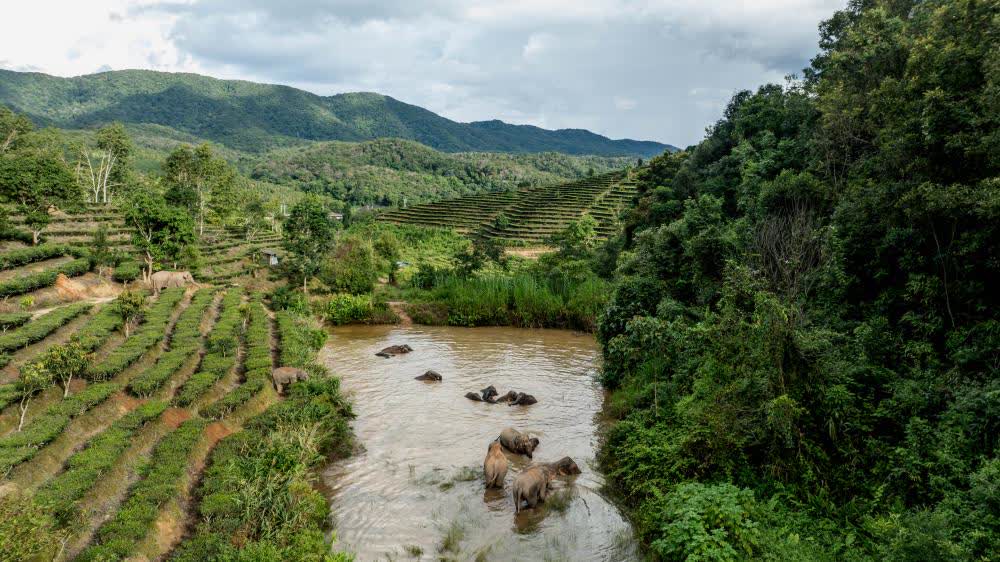
KUNMING, May 21 (Xinhua) -- While wild Asian elephants are enjoying their far-ranging treks in southwest China's Yunnan Province, conservators and researchers can closely track and study their activity patterns "quietly and unobtrusively."
The secret lies in the BeiDou satellite-positioning collars around the necks of these freely roaming gigantic creatures. Thanks to constant monitoring from space, people can grasp that their activity curves peak in the early morning and at dusk, with nighttime activity intensity higher than during the day.
On the distant Qinghai-Tibet Plateau, conservators are integrating drone photography with satellite positioning and other smart technologies, ushering once-arduous, labor-intensive wildlife patrol into a new stage of "precision monitoring and scientific management."
From primeval forests to alpine plateaus, from sunrise to sunset through seasons, China's wildlife conservation sector is applying an array of modern smart technologies to better safeguard wildlife and nature, exploring the secrets of a better, harmonious coexistence.
"Keeping pace with technology advances, we developed BeiDou satellite-positioning collars tailored for wild Asian elephant conservation efforts, which are capable of real-time positioning of elephants' locations and activity status in the vast wilderness," Chen Fei, director of the Asian Elephant Research Center of the National Forestry and Grassland Administration, told Xinhua in an exclusive interview.
Thus, these positioning collars can help conservators and researchers obtain more precise and effective position information on wild elephants, as well as provide early warnings when needed.
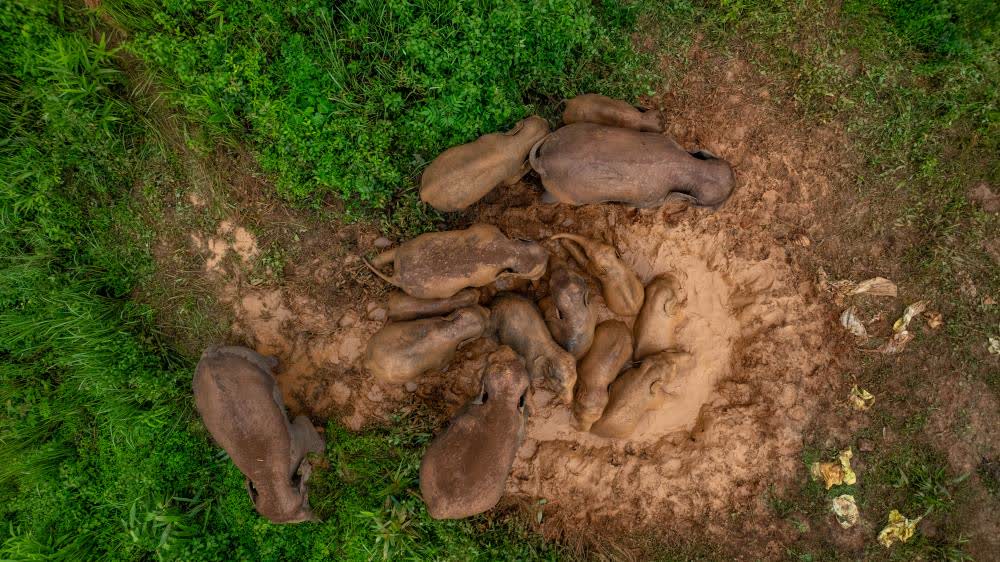
As a flagship species in tropical forest ecosystems, the Asian elephant is under first-class state protection in China and is designated as "endangered" by the International Union for Conservation of Nature.
Known as the "animal kingdom," Yunnan is home to 9 herds with more than 300 Asian elephants across around 40 townships.
Chen's team continuously tracked and monitored wild Asian elephants using BeiDou satellite-positioning collars and quantitatively analyzed their activity patterns, simultaneously using activity and movement speed data to systematically analyze their activity rhythm characteristics.
Activity rhythms are core indicators of animal behavior and ecology. Related research can reveal animals' temporal allocation strategies in relation to their environment, assess the degree of disturbance, survival threats, and environmental pressures, and provide scientific support for species conservation management.
Compared with traditional field observations and infrared camera monitoring, BeiDou satellite-tracking collars can provide long-term, fully automated, uninterrupted, precise positioning without spatial or temporal constraints. Therefore, they can help conservators obtain large amounts of continuous and reliable location information that significantly enhances the analysis's comprehensiveness and credibility.
"We explored the use of different data types to analyze wildlife daily activity rhythms, showing the activity rhythms of tracked Asian elephant individuals, as well as seasonal and wet-dry season differences," Chen said.
"This new-tech exploration for conservation work not only enhances our ability to ensure human-elephant safety, but also provides a solid foundation for more in-depth scientific research," he added.
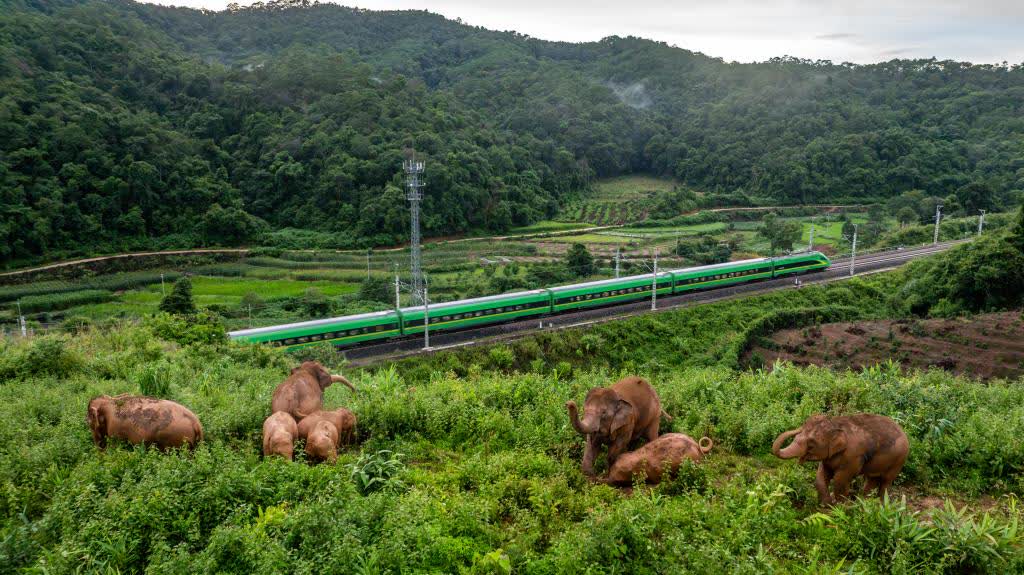
In fact, smart-techs are making both human and wild elephants safer. Along the Yunnan section of the China-Laos Railway, builders specifically considered the safety and free movement of Asian elephants by adopting measures such as extending tunnels and replacing roads with bridges to provide exclusive passages for them.
Additionally, they installed dozens of kilometers of flexible steel protective fences and sound barriers in their presence areas, preventing elephants from intruding onto the railway while also avoiding injuries to elephants. An AI-and-infrared monitoring system can also provide real-time early warnings, allowing people to minimize disturbance to elephants' activities.
In fact, such modern and effective technologies are playing an increasingly important role in wildlife and biodiversity conservation efforts across China. For instance, AI-based species identification, remote sensing of habitats, and real-time data transmission through space-ground integrated monitoring systems and other emerging technologies are enabling better conservation work with minimal disturbance to wildlife.
In the Qinghai section of the Qilian Mountains, smart technologies are deeply integrated into wildlife patrols, enabling conservators to move beyond previous means of "foot-and-eye" to modern "precision monitoring and scientific management."
By now, a full set of intelligent devices, including 5G law-enforcement recorders, satellite phones, drones, and night-vision devices, is empowering the eco-police station in the Laohugou region of Menyuan Hui Autonomous County in Haibei Tibetan Autonomous Prefecture of Qinghai. Through 3D modeling of its jurisdiction, key road sections, water sources, and wildlife activity areas are all incorporated into dynamic monitoring.
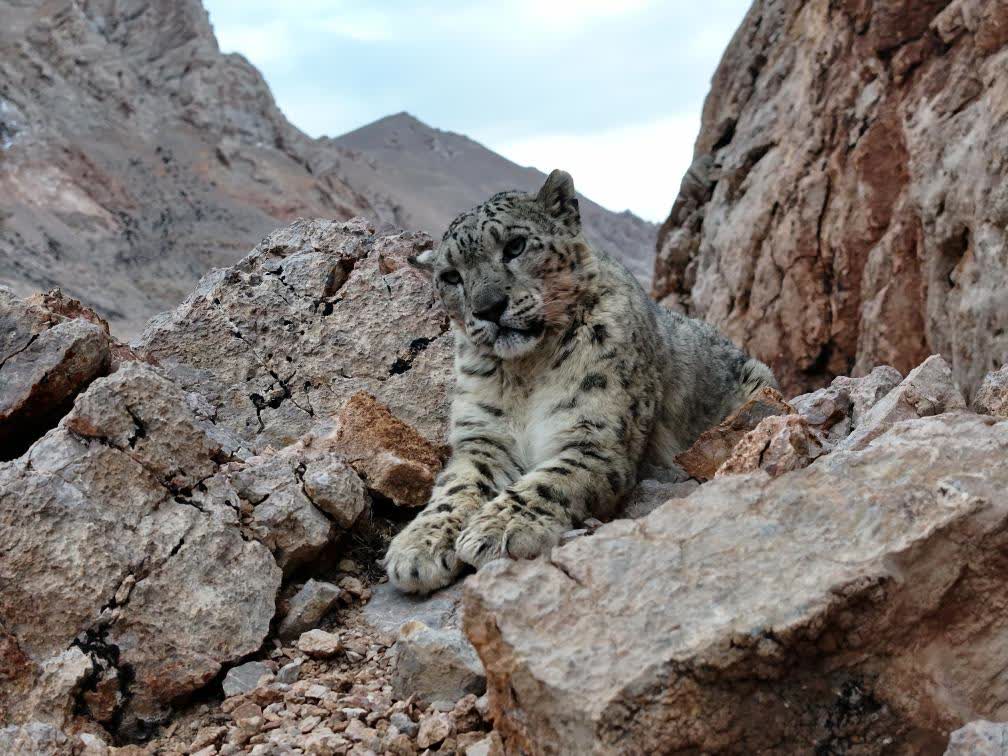
Located on the northeastern edge of the Qinghai-Tibet Plateau, the Qilian Mountains serve not only as a core distribution area for flagship species such as the snow leopard, but are also home to endemic species of the plateau, including the wild yak, Tibetan wild ass and Tibetan antelope, making it a biodiversity hotspot.
"In the past, patrolling on foot normally cost us around a month to reach all areas under jurisdiction," said Li Yongcheng, a policeman at the eco-police station.
Now, with drone photography and satellite positioning, key areas are fully covered, and their patrol efficiency has been greatly enhanced. The round-trip time for patrolling the farthest areas has been shortened from 16 hours to just a few hours.
"Technologies have not only improved our patrol efficiency, but also ensured greater precision in our rescue operations for wildlife," Li said.
Thanks to the mastery and integrated application of smart technologies, Chinese wildlife conservators have a greater capacity to carry out protection work using diverse "modern tools." For example, long-term tracking and collection of fecal and hair samples are helping genetic analysis determine blood relationships among elephant herds; infrared cameras, patrolling drones, and AI recognition platforms are providing real-time data to support patrol and rescue efforts on the plateau.
"Modern technologies are supporting us to quietly and better safeguard those wild creatures and their habitats, ensuring they roam freely in nature," Chen said.