
[放眼天下]Washington's China policy will become rational again
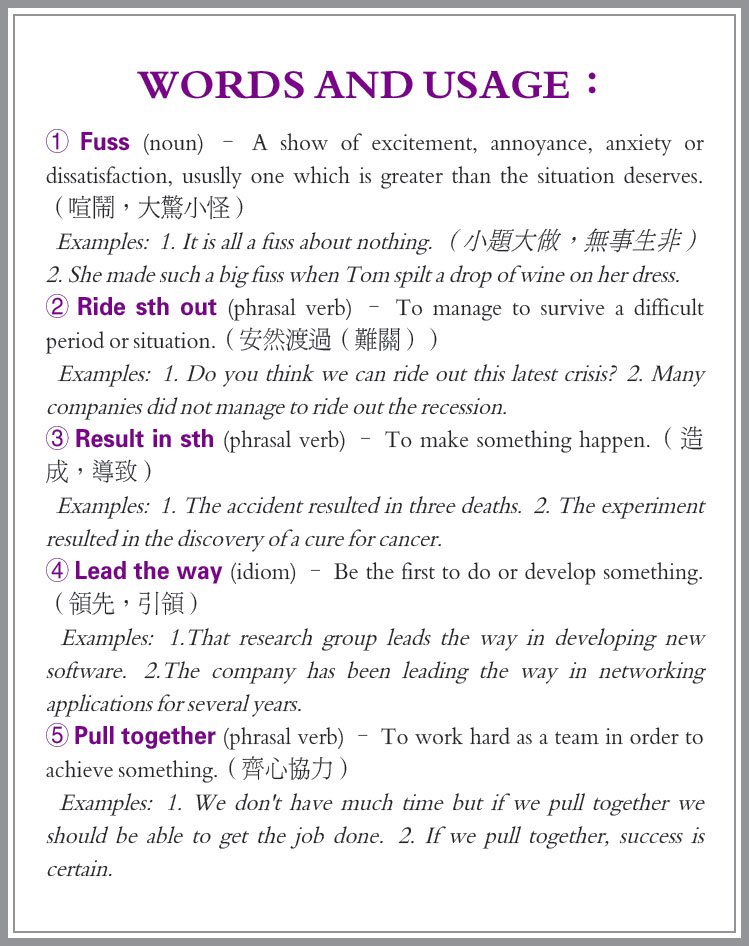
The slogan "Change!", that had enabled Barack Obama to enter and host the White House, now seems to have lost its momentum and attraction to Obama and his Democratic Party. Nevertheless "Change" has been witnessed in the mid-term election of the US Congress. The mid-term election, that has been raising a big fuss, now comes to an end at last. The results are well within expectations. The ruling Democratic Party suffered a big setback in the election, losing its control of the House and just managed to keep a marginal majority in the Senate. The reality of a split Congress not only deals a heavy blow to the Democratic Party but also serves a bad omen for the Obama's attempt for re-election as US president.
As for the Chinese people, they are more concerned with the impact of the results of the mid-term election on the complicated and often puzzling Sino-US relations. In quite a long period of time during the mid-term election, some American politicians had consistently held China responsible for economic problems in their own country, blaming China's exports and the exchange rate of renminbi (RMB) for the huge deficit and constantly high unemployment rate in the US. In this way they attempted to divert public attention so as to ride out their mid-term election predicament. This has intensified trade friction between China and the United States, resulting in upheavals in their relations.
In the run-up to the election, many analyses had already pointed out that the results of the election – whatever they might be – could hardly bring any big change to Sino-US relations. For, Sino-US relations are built on the basis of mutual benefits and interests, and the process of the development of Sino-US relations in fact is one in which their interests are being adjusted and tested. Determined by such a nature, Sino-US relations will hardly undertake any big change due to the struggle between the Democratic Donkey and Republic Elephant. Nor will there be a qualitative adjustment in Sino-US relations because of the results of the mid-term election. With the mid-term election coming to an end, the "hot topic of China" as election rhetoric will gradually cool down, and Sino-US relations will tend to become more rational and practical.
Right now, the US economy has yet to walk out of the shadow of the economic and financial crisis. The steps of its economic recovery are heavy and Washington has to continue launching the quantitative easing (QE) monetary policy one around after another. In Asia, China is leading the way to economic recovery. Such a big contrast is evidence that China is indispensable for the United States.
Needless to say, China and the United State have common interests not only in economy but also in international relations. However, for a long period of time, Sino-US relations have had to make advancement through hardships and difficulties out of conflicts and frictions. In recent times, in particular, the US is speeding up its "comeback to Asia" in an attempt to become the leader of Asia. It has been making a fuss over the incident of the sinking of The Cheonan (a South Korean navy ship), the South China Sea issue and, lately, the dispute between China and Japan over the sovereignty of the Daioyu Islands, in an attempt to contain China and to impede China's rise. All this has further complicated the development of relations between the two countries.
China's rise and the US's efforts to safeguard its status as the "Big Brother" of the world do not irreconcilably contradict each other. The two countries can absolutely find some way for coexistence. China's rise does not threat the US and its allies. Instead, because of the foreseeable good tendency of China's economic development and the elevation of China's international status, China's rise can surely make a dramatic impact on and stimulate the US economy and the world economy, and make greater contributions to peace in the world and the region. This also provides a foundation of common interests for Sino-US relations.
The setback of the Democratic Party in the mid-term election is a manifestation of US public's urgent demands for economic recovery and improvement of people's livelihood. The US absolutely cannot overlook the importance of Sino-US relations, as China is its important trade partner and the holder of the largest amount of US treasury bonds. Sino-US cooperation is not a zero-sum game. Instead the development of Sino-US relations is an inevitable trend. How to improve and advance Sino-US relations is a problem the Obama administration must deal with seriously after the mid-term election. China and the United States must foster sincere cooperation and pull together to promote the construction of an overall cooperative relationship in the 21st century. This is in favour of the development of both countries, and in favour of the development of the world as well.
04 November 2010
