
【社評雙語道】科研「上天下地」 振經濟惠民生
原文
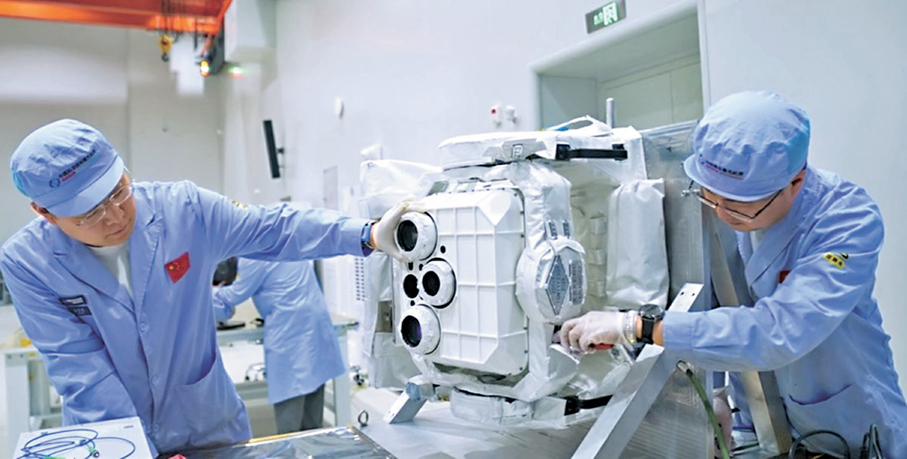
摘錄自5月14日香港《文匯報》:香港科技大學13日公布,其牽頭研製的溫室氣體點源協同探測儀「天韻相機」,日前隨天舟十號貨運飛船成功運抵中國「天宮」空間站,是香港首項登上國家空間站的科研載荷。
香港在高端航天儀器研發領域實現了歷史性突破,再次印證香港具備研製世界先進航天科研載荷的雄厚實力,可為國家前沿科技發展輸送科研技術和人才,作出香港貢獻。未來,香港應加快創新科研成果產業化,為驅動經濟轉型升級注入嶄新動能,增進民生福祉。
「天韻相機」作為全球首款輕小型、高分辨率、高精度溫室氣體點源協同探測儀,在嚴格的體積與重量限制下同時兼顧了高光譜解析度及百米級空間分辨率,能夠從太空精準監測發電廠、堆填區等重點排放設施的二氧化碳及甲烷濃度。這體現了香港科學家在前沿光學設計、精密加工及系統整合等領域的國際領先水平,是香港參與國家航天任務的又一重要里程碑,證明香港科研力量有信心、有能力在國家最高層級的航天平台上作出實質貢獻,並直接服務於國家「雙碳」等戰略目標。
中國載人航天工程辦公室12日正式發布神舟二十三號載人飛行任務標識,其設計包含紫荊花圖案,外界普遍猜測首名港產載荷專家有望參與這次任務。
事實上,香港近年持續為國家航天事業作出重要貢獻:從香港理工大學參與研製嫦娥五號及嫦娥六號「表取採樣執行裝置」,到香港中文大學和香港大學牽頭的項目入選天問三號火星探測任務合作遴選,再到如今科大的「天韻相機」進駐「天宮」;國家亦不斷向香港提供寶貴的機遇,使得無論是航天科研儀器還是載荷人才,香港都能在國家航天事業發展的偉大征程中獲得發揮所長的舞台和機會。
這種相互促進、相互成就的關係,不僅讓香港科研人員得以參與頂尖國家任務,為國家加快建設航天強國貢獻獨特力量,更讓香港透過一次又一次的航天任務成就,向世界展示其頂尖的航天科研水平和實力,不斷提升香港的國際聲譽及國際創科中心地位。
值得強調的是,香港的科研優勢絕不限於航天領域。從生命健康、人工智能、先進製造、材料科學到環保工程,香港各大院校均擁有雄厚的基礎研究實力。
接下來,香港將繼續積極承擔國家重大科研任務,加快將優秀科研成果從實驗室到市場的全鏈條轉化,深化「政、產、學、研、投、用」協同,形成完善的產業生態系統。
例如,特區政府通過InnoHK創新香港研發平台等計劃投入大量資源,發揮了良好的引領示範作用。
除了特區政府的帶頭引導,產業界應積極參與技術驗證與應用開發,投資者需以耐心資本支持初創企業跨越因資金缺口、技術瓶頸或商業化能力不足而面臨倒閉的「死亡谷」,市場則要主動提供豐富的應用場景。同時,香港應充分利用粵港澳大灣區融合發展的機遇,與大灣區內地城市的先進製造業攜手合作,實現優勢互補、共贏發展。
唯有打通從基礎研究到產業應用的全鏈條,香港才能真正將創科成果惠及經濟民生,為推動經濟轉型升級注入源源不斷的創新動力,在融入和服務國家發展大局、貢獻國家科技強國建設中作出新的更大貢獻,實現自身高質量發展。
譯文
Accelerating Hong Kong's Research "From Space to Ground" to Boost the Economy and Improve Livelihoods
The Hong Kong University of Science and Technology (HKUST) announced yesterday (13 May) that the Multi Spectral Imaging Carbon Observatory (MUSICO), a synergistic observatory for carbon dioxide (CO2)and methane (CH4) emission point sources, was successfully launched aboard the Tianzhou-10 cargo spacecraft on May 11 and has since arrived at China's Tiangong Space Station, marking Hong Kong's first scientific payload deployed on the national Space Station. Hong Kong has achieved a historic breakthrough in the field of high-end aerospace instrumentation, once again demonstrating its strong capability to develop world-class space research payloads. It will enable Hong Kong to contribute scientific expertise and talent to the nation's cutting-edge technological development. Looking ahead, Hong Kong should accelerate the commercialisation of innovative research outcomes to inject new momentum into economic transformation and upgrading, and to enhance public well-being.
As the world's first lightweight, high-resolution and high-precision synergistic observatory for greenhouse gas, MUSICO, under strict size and weight constraints, achieves both high spectral resolution and one hundred‑meter spatial resolution. It is capable of determining gas concentrations of CO2 and CH4 from facilities such as power plants and landfills through precise space-based monitoring. This demonstrates the internationally leading standard achieved by Hong Kong scientists in fields such as optical design, precision manufacturing and system integration, and represents a major milestone for Hong Kong in the nation's space missions. It also proves that Hong Kong's research capabilities can make confident and substantial contributions on the nation's highest level aerospace platforms, and directly support the realization of the "dual carbon" goals.
The China Manned Space Engineering Office officially released the mission insignia for the Shenzhou-23 crewed mission on 12 May. Its design features the bauhinia flower, leading to widespread speculation that the first Hong Kong payload specialist may take part in the mission. In fact, Hong Kong has continued in recent years to make important contributions to the nation's space programme: from The Hong Kong Polytechnic University's participation in developing the surface sampling and collection devices for the Chang'e-5 and Chang'e-6 lunar missions, to projects led by The Chinese University of Hong Kong and The University of Hong Kong being selected for collaboration in the Tianwen-3 Mars exploration mission, and now to HKUST's MUSICO being stationed aboard Tiangong. At the same time, the nation has continually provided Hong Kong with valuable opportunities, enabling both scientific instruments and payload specialists from the city to showcase their strengths and contribute to the grand endeavour of national space development.
This mutually reinforcing and mutually beneficial relationship not only allows Hong Kong researchers to participate in top-tier national missions and contribute unique strengths to the country's goal of becoming a leading space power, but also enables Hong Kong to demonstrate its world-class aerospace research capabilities to the international community through successive mission achievements, thereby enhancing its global reputation and strengthening its position as an international innovation and technology hub.
It should be emphasised that Hong Kong's research strengths are by no means limited to the aerospace sector. From life and health sciences, artificial intelligence, and advanced manufacturing to material science and environmental engineering, Hong Kong's universities possess substantial fundamental research capabilities. Going forward, Hong Kong will continue to actively undertake major national research tasks, accelerate the full-chain transformation of outstanding research outcomes from laboratory to market, and deepen collaboration across "government, industry, academia, research, investment and application" to build a comprehensive industrial ecosystem.
For example, the Government has invested significant resources through initiatives such as the InnoHK research clusters, playing a strong leading and demonstrative role.
In addition to government guidance, industry should actively engage in technology validation and application development; investors should provide patient capital to help start-ups cross the "valley of death" caused by funding gaps, technological bottlenecks, or insufficient commercialisation capacity; and the market should proactively provide abundant application scenarios. At the same time, Hong Kong should fully leverage the opportunities arising from the integrated development of the Guangdong–Hong Kong–Macao Greater Bay Area, working closely with advanced manufacturing industries in mainland cities within the Greater Bay Area to achieve complementary advantages and win–win development.
Only by establishing an unbroken chain from fundamental research to industrial application can Hong Kong truly translate innovation and technology achievements into benefits for the economy and people's livelihoods. This will provide a continuous stream of innovative impetus for economic transformation and upgrading, enabling Hong Kong to make new and greater contributions to the country's development and its ambition to become a global leader in science and technology, while achieving high-quality development of its own.
●Tiffany
