
Direct Subsidy Scheme must be safeguarded
Ahead of next Monday's Legislative Council (Legco) public hearing on the financial management problems of some Direct Subsidy Scheme schools, the Education Bureau last night released the names of 60-plus direct-subsidy schools accused of irregularities, which accounted for more than 90% of such schools.
The problems revealed have aroused wide attention among parents and citizens across Hong Kong, which is not a surprise. The difference of direct-subsidy schools from government schools and subsidized schools lies in that, while receiving direct subsidies from the government (from $30,000 to $60,000 per head for students in various forms), they can also collect tuitions from parents for various purposes such as conducting teaching experiments, constructing school buildings or organizing extracurricular activities. As such they enjoy greater autonomy and flexibility in school administration. Because of this, since the Direct Subsidy Scheme was introduced in early 1990s, many school groups and sponsoring bodies including elite institutions have applied one after another to join the scheme, turning themselves into direct-subsidy schools from private schools or subsidized schools. Parents have also welcomed the change.
Against such a backdrop, the release of the Director of Audit's Report No 55 last week could not but cause a public uproar, which for the first time points out problems with direct-subsidy schools such as accounts not in order and chaotic management. According to the Report, problematic practices with direct-subsidy schools include: some schools having huge reserves varying from $15 million to $60 million still applied for permission to increase tuitions every year; some schools had reserves but claimed to be in deficit; some put their entertainment expenditures into the government-subsidy account, or cut tuition-waivers and scholarships for students, or received "donations" from lunch-box suppliers; a school even spent $70 million to invest in funds or speculate on stocks...
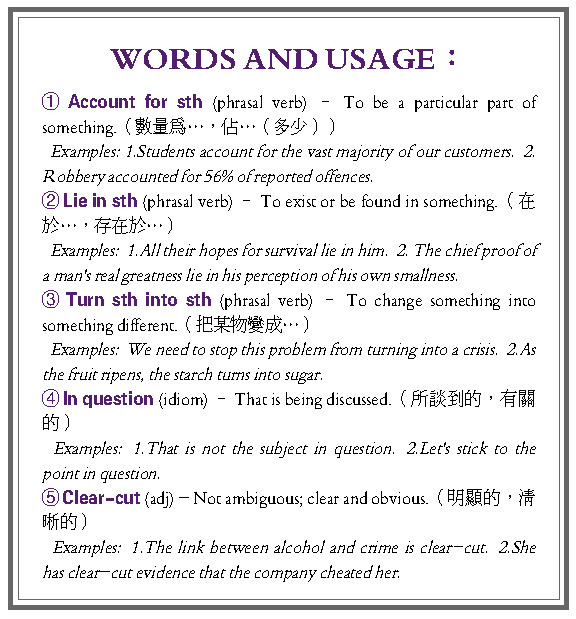
No doubt, from the cases unveiled in the Director of Audit's Report, the schools in question indeed have problems with their financial management and they must make a clear-cut explanation to the Legco and parents. The crux of the matter lies in whether the expenditures or investments in question had been, as required, submitted to the school boards for approval beforehand, whether such operations were transparent or in "black-box" and in violation of regulations, and whether some individuals had taken personal benefits from the activities. All such issues must be probed and clearly answered.
On the other hand, the education authority also has inescapable responsibility in supervision for the financial irregularities of direct-subsidy schools. Have the schools in question ever truthfully submitted figures of their expenditures and balances when they filed in their applications for increasing tuitions? Are relevant regulations too much lax? Is it in the interest of students and their parents for a school to invest its financial surplus in funds and stocks?... For these questions, it is also necessary for the Education Bureau to make an explanation to the Legco, citizens and parents.
In terms of school-running mode, allowing direct-subsidy schools to have certain flexibility is by no means a bad thing. There is also no need for a direct-subsidy school to apply to the Education Bureau for approval for trivial matters such as the spending or a few hundred dollars. However, the direct subsidies are taxpayer's money. It is the responsibility of the Education Bureau to supervise on teaching quality and relevant personnel's conduct and integrity. In this regard, there is no room for carelessness and negligence. If violations of regulations or laws are found in the activities in question, then there is only one solution: they must be deal with by law.
On the other hand, for sponsoring bodies and school management personnel, school-running is out of an ideal, a loving heart and a duty to pass down knowledge and enlighten students. As such, they must be perfectly open, straightforward and responsible to their teachers, students and parents, explaining clearly to them why tuition should be increased while there is still a surplus and how huge reserves are spent. They must not take financial surpluses as "private assets" and keep parents who pay fees every month in the dark.
In regard to the problems exposed, one important principle is to deal with them according to law on the basis of facts. There is no need to make any ungrounded speculation and accusation. Some media outlet earlier reported that some school had spent $40,000 on building a "dog house". The school authority later clarified that it needed to raise several dogs and install security equipment - not for fun but for safety, because it was located in a New Territories area near the border where illegal immigrants often sneaked in. As such, the accusation of "spending $40,000 for a dog house" is not true and sound. The overall image of Hong Kong's direct-subsidy schools and their achievements in and contributions to teaching must be cherished, rather than being denied arbitrarily.
25 November 2010
