
Hefty electricity tariff increases not groundless but heartless
The Hongkong Electric Co, Ltd (HK Electric) and CLP Power HK Ltd (CLP Power) yesterday announced simultaneously hefty tariff increases of 6.3% and 9.2% respectively – starting next year.
Just like what they had always done in the past, this time when the two power operators announced the tariff hikes, both also played some deceptive tricks of taking "one step back for two steps forward". For instance, CLP Power said it would reduce the Basic Tariff for the first 400 units of electricity consumption per bill for residential customers, and estimated 700,000 customers would benefit from this. But even so, these customers still have to pay up to $10 more each month. How on earth can this be said as to "benefit" them?
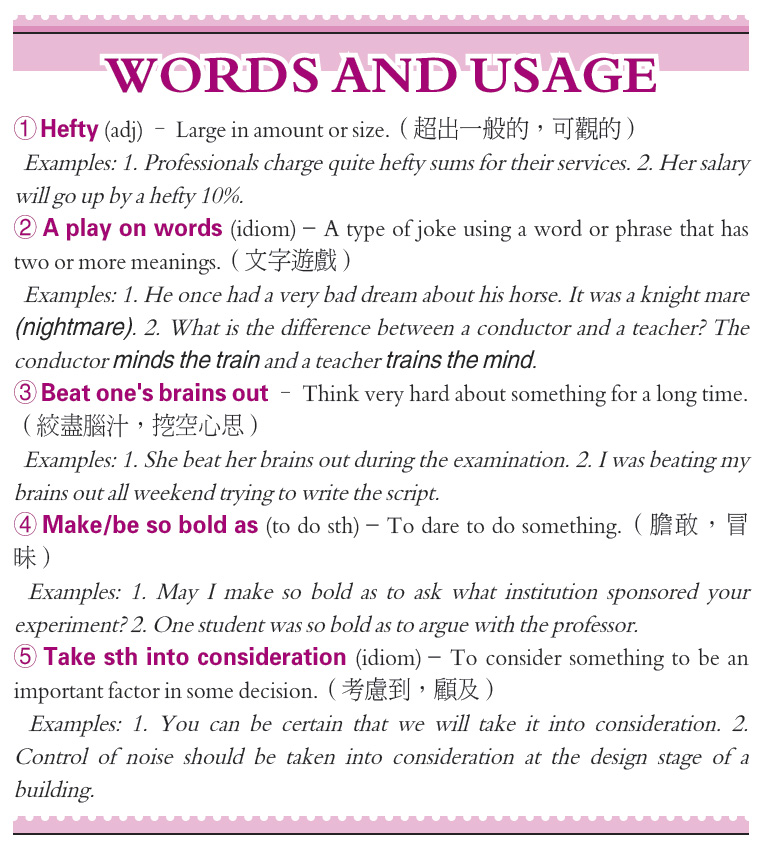
Likewise, when announcing the tariff increase, HK Electric also stressed that about 70% of its domestic customers using 500 units or below monthly would have their tariff increased by "less than" $25 a month. And for 70% of non-domestic customers using 1,700 units or below monthly, the increase would be "less than" $131 a month. This is obviously a play on words. The so-called "less than" $25 or "less than" $131 is in fact meant paying $25 or $131 more. One may have to beats his brains out trying to figure out how to interpret "more than" into "less than".
However, what makes all citizens in Hong Kong feel helpless, defenseless and even outraged is by no means limited to such tricks as a disguised replacement of words or a play on words the two power companies used to justify their tariff increases.
Needless to say, as the two largest public utility companies in Hong Kong, they can always find some high-sounding reasons when they want to increase tariffs. The two reasons cited by the two power companies for tariff increases this time are surging fuel costs and their increases of investment in environment protection.
These two reasons may be said as quite sufficient and irrefutable. For example, HK Electric argues that international fuel prices have remained high in recent years. Coal and liquefied natural gas (LNG) prices have gone up by about 20% and 47% respectively since the end of last year and the upward trend is expected to continue in 2012. The company has not been charging customers in full fuel costs over the past years, resulting in an accumulated negative balance of $500 million in the company's fuel clause recovery account. Therefore, 90% of the upcoming tariff increase is to compensate the fuel price hikes and the company makes no extra profit from it.
How nice such words as "compensation" and "no extra profit" may sound! As a matter of fact, which sector in Hong Kong could be spared by increased operational costs caused by international fuel price hikes? But which sector would be able to increase charges like HK Electric for "compensation"? Many enterprises in other industries have gone under due to international fuel price hikes, as they could not have even sustained minimal profits for survival. Who else could be so "arrogant" as to say they would make "no extra profit" for price increases?
Likewise, power generation is by no means the only industry in Hong Kong to make extra investment, and thus increase the operational costs, to meet requirement for emission control for the sake of environmental protection. How come CLP Power could make so bold as to cite meeting emission reduction requirement and increase in investment in emissions control facilities and new infrastructure for using more natural gas in power generation as reasons for tariff increase, and in this way completely shift its social responsibility and "cost" of emission reduction onto its customers? Do other industries enjoy such privilege?
In fact, according to HK Electric's annual report, its profits last year totaled more than $7.1 billion - up 7.4% from the previous year. Of the total, the profit from its Hong Kong business operation accounted for $4.659 billion. CLP Power last year reaped total profits of $10.3 billion with its net profit up 26.1% from a year before, and its profit from Hong Kong business operation reached $7 billion, up 3.3%. To date, the two companies are making considerable profits and still expanding investments in order to make even more profits.
On this, Secretary for Environment Edward Yau Tang-wah yesterday pointed out that the two power companies' proposed tariff increases were too high and hoped they would reconsider their proposals. Under the effective franchise agreements, the government can do nothing about it if the tariff increase by either of the two power operators is kept below 9% or the level of so-called "reasonable profit". The government may not be able to do anything about it. But citizens and public opinions can voice their objection and antipathy. They can demand the two power operators to shoulder their corporate social responsibility and show their corporate social conscience, and take into consideration the hardships of vast citizens under the pressure of inflation while making money.
14 December 2011
