
Congratulations to Tu Youyou on winning the Nobel Prize in Medicine
The jury selecting the winners for the Nobel Prize in medicine announced yesterday that the 2015 prize went to Tu Youyou, a female Chinese scientist, for her discovery of an anti-malarial agent called Artemisinin. This is the first time for a Chinese national to win a Nobel Prize in science.
Irish-born scientist William Campbell and Japanese scientist Satoshi Omura shared this year's Nobel Prize in medicine with Tu for their research in parasitic diseases.
For Chinese scientists especially those in traditional Chinese medicine, Ms. Tu's winning the prize surely is good news worthy of celebration. This is despite the fact that, the Nobel Prize's selection standards and field of vision have long come under question and criticism. Not long ago, a retired member of the Nobel Institute said in his memoir that it was a mistake to award the 2009 Nobel Peace Prize to [US President] Barack Obama, and that he regretted that decision. The White House immediately retorted that Obama had also thought of turning down the award. But in the domain of natural sciences, Nobel prizes in medicine, physics and chemistry are still regarded internationally as the least disputed, authoritative awards to honour greatest achievements. Chinese and foreign scientists all see it an honour to mount the rostrum in the Royal Swedish Academy of Sciences.
Therefore, Tu Youyou's winning the prize this time should surely be a pride-worthy big event which is also of breakthrough significance. This is despite that for this female scientists who is already 85 years old and her research findings, this prize arrives too late rather than too early. As a matter of fact, research on treatment of malarial with artemisinin had started as early as in later 1960s. At the time, malaria had remained a fatal infectious disease in some backward Chinese regions and in the African continent, with millions of people killed annually by this disease. The then national leaders Mao Zedong and Zhou Enlai personally ordered the Chinese Academy of Sciences (CAS) to do research on prevention and treatment of malaria. The research was name Project 523. Over 500 scientists and researchers were mobilised to concentrate on the research project.
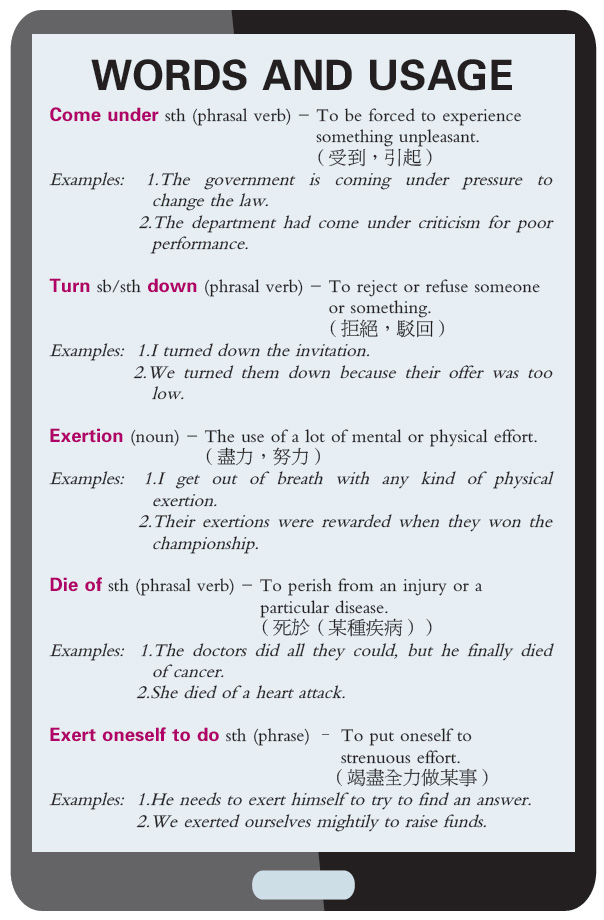
At that time, Tu Youyou, then some 30 year old, joined the research team and made breakthroughs with exertion and persistence, eventually successfully found Dihydroartemisinin which could kill plasmodium falciparum (malaria parasite) with 100% effectiveness. It has since been widely used in African countries to save millions of lives each year.
Hence, Tu's success and fame by no means are just achieved today, and her research findings are not recognized just because of winning the Nobel Prize today. Such cheap yet highly effective cure for malaria found by Ms. Tu has benefited millions and millions of poor people and saved numerous lives, and has long been recognised by the international academic circle. She has long been recognised for deserving to be granted the Nobel Prize in medicine and internationally glorified.
As matter of fact, before the announcement of the Nobel Prize this time, the US Lasker Medical Research Awards already granted its Clinical Medical Research Award to the then 81-year-old Tu Youou in 2011. What is worth mentioning is that the first overseas prize Ms. Tu has ever won is the Collective Award for Outstanding Achievement of Science & Technologies awarded by Hong Kong's Qiu Shi Science & Technology Foundation.
At that time, founder of Qiu Shi Science & Technology Foundation, the late industrialist Mr. Cha Chi Ming, had invested in Nigeria and operated the largest printing and dyeing mill and textile factory in this African country, employing tens of thousands of local workers. But quite a number of the workers had died of malaria every year. So upon learning that Tu Youyou's team was doing research on treatment of the disease with Artemisinin, Mr. Cha had immediately allocated funds to financially support the project. In 1996, the Foundation's prize jury, whose members including Chen-Ning Franklin Yang and Zhou Guangzhao, decided to award the one-million-yuan Collective Award for Outstanding Achievement of Science & Technologies to Tu's team. Therefore, it could be said that the Qiu Shi Foundation had understood the significance of her research 20 years before the Nobel Prize did. It really could discern what others couldn't. This is also an episode showing the predestined relationship between Hong Kong and Ms. Tu.
It is hoped that Ms. Tu Youyou's winning the prize could inspire more young scientists and students in the Mainland to continue exerting themselves to make achievements in scientific research so as to benefit humankind and win honours for the country.
06 October 2015
